Sunday, 3 April 2016

Smoked Eggplant

Building the smoker (and fireplace)
Branko has been busy this winter, preserving food. 
It started last year with fermenting cabbage to make sauerkraut and morphed into smoking eggplants and hot peppers.  To clarify, Branko wasn't "smoking" eggplants but smoking them to eat, using his wood stove as the smoker.
He came up with the brilliant idea to use a bamboo steamer,  which is made of interlocking trays with perforated bottoms that stack one on top of the other. The whole basket is placed over the chimney so the smoke  rises through the layers,  curing and smoking the food.  
Bamboo racks

Bamboo steamer


The eggplants are peeled, sliced, salted and left for an hour or so,  allowing the salt to draw out the moisture.
After wiping the excess moisture from the eggplants, they are placed in the steamer trays.

Ready to get 'smoked'

Twigs seem to be the best for this stove.
The steamer is placed on top of the Charlie Noble (top of the chimney)
Moisture is still created from the vegetables and smoke, so the eggplants need to dry in the air/sun after a few hours of smoking. 
Depending on the thickness of the slices, the smoking process can take a couple of days.

Chimney with Charlie on top

Bamboo steamer added


Finished product

Because of the curing process the eggplants and hot peppers are preserved, needing no refrigeration.   Branko made babaganosh and smokey eggplant oil ( using olive oil.)  The hot peppers were made into siraccha sauce, but also left as is (smoked and dried) for added flavor in any meal.
Next up orange and lemon marmalade.
Sue Chef,
Marg
(I know it's not spelled "Sue")

The Normans

Norman Castle (Naples)


Gerace, Calabria


I was trying to include my new found interest in 'The Normans'  in other posts,  but I kept coming up with more  information about them.  So they will have their own.  They deserve at least that much.

10 Interesting Things about the Normans:

1)  Originally pagan barbarian pirates from Demark, Norway and  Iceland.
2)  French King, Charles the Simple gave the Normans Normandy, to halt their plundering.
3) The Normans (William the Conqueror) in 1066 took over England.
4) Winchester Cathedral, Colchester Castle, Mont Saint Michel (France),Windsor Castle, 
     Tower of London, Monreale Cathedral (Sicily) and 1000's more castles across southern Italy, 
     Sicily, Ireland, France, Malta, Cyprus, Canaries and Scotland were built by the Normans.
     The White Tower in London is a quintessential Norman keep.
5) Between 1066 and 1087 in England the Normans built 86 stone castles in 21 years.
6) The Doomesday Book and the Bayeux Tapestry was created by the Normans
7) The Normans moved into Sicily and Southern Italy as mercenaries. They had previously been 
    Crusaders.
8) Queen Elizabeth is the 22nd granddaughter of William the Conqueror.
9) The Normans introduced stone castles to England.
10) Chivalry stems from the Norman codes of conduct on the battlefield.

Here in Calabria and in Sicily the Normans are still visible what with the keeps, castles and towns that still stand. Initially my interest in the Normans was due to where the castles/keeps were built. Inhospitable areas, on the peaks of mountains, with sheer cliffs surrounding the buildings (this is now, imagine what it would have looked like in medieval times?)  How did they get all that stone up the sides of cliffs?  Prisoners and ruled under the feudal system.


Entrance to Norman castle, Naples
Nice stonework, Norman castle


When available, stone and brick was taken from existing structures.   In England many Roman roads and buildings were pillaged and the brick reused.  The sites of the castle were important as they were built to act as fortified posts for the military, frighten the locals (in the town below), govern the area without getting too close to the frightened locals, build on the highest ground, often where rivers joined.  The Keep was the initial structure surrounded by ditches, banks and later moats. The rivers were used to transport stone, hence the location near rivers.   I imagine the fact there was fresh water close by might be good for a castle and its residents.   The Keep was the most protected part of the castle.   Medieval towers and cranes were created for building purposes and a Barbican was built at the large stone gateways.  Capturing stone castles required specialized equipment,  they often used siege engines and dug under the castle.   Seige engines?  They pounded the wall with stone missiles or huge arrows. 

A few different kinds of seige engines:
1) The Ballista
2) The Mangonel 
3) The Trebuchet
4) The Battering Ram, in many sizes

The moats were created to stop the miners/diggers.  The Normans and their enemies fought by ramming doors, walls and digging tunnels to the corners of the castle building (a weak point that led  to the creation of round stone castles) where they set fire to brush and tinder thereby collapsing the corners of the castle.

While the miners and rammers were busy working the Normans would defend the castle:
1) Throw, fire, toss - arrows, stones, fire and boiling liquids down to the attackers, as they dug 
    tunnels, climbed the stone walls, busy ramming or just negotiating the ditches, embankments or
    moat
2) Boiling liquids, called Greek Fire, was any liquid made from molten metal or oil

What was the key/keys to their success? 
The Normans saw themselves as a warrior society.  Which is likely no different a society then how their enemies, saw themselves.  The medieval world was a violent place to live.   It seems though that the Normans had inherited warrior genes, they retained many of their viking traits.   
Restlessness, recklessness, a love of fighting,  courage and a craftiness and; cunning that went hand in hand with outrageous treachery.  In their expansion into other parts of Europe, the Normans compiled a record of astonishingly daring exploits in which often a mere handful of men would vanquish an enemy many times numerous.  An unequaled capacity for rapid movement across land and sea, the use of brutal violence, a precocious sense of the use and value of money - these are among the traits traditionally assigned to the Normans
Unbridled character and capacity of quick and fruitful imitation and adaptation.  Many of the most powerful and successful secular potentates of their age in western Europe in their ability to create political institutions that were both stable and enduring.
the Normans began as pagan destroyers and ended up by the 11th century as one of the most highly feudalized states in western Europe.

The Normans were seafaring warriors that because of their trait of imitation became masters of cavalry warfare, leadership and luck.  The leaders possessed capable and charismatic personalities, Iron Fisted -William of Normandy, Robert Guiscard whose epitaph begins "Here lies the terror of the world..", and Rollo the Walker, called that because he was such a giant that no horse was strong enough to carry him.  

Information on The Normans taken from a variety of sites.   Wikipedia, The Normans and Battles of the Normans.
Marg.

Rocella's Norman castle


Saturday, 28 November 2015

A Few Words from the Dogs

The Pupinaros (Wylie and Rosie)

Obviously we ( the dogs) did not write the title of our blog;  because we would have said something like "Message from the Crew", "The Pupinaros part 1" or perhaps "Getting the inside scoop, a dogs perspective."  But we are bound by greater powers, and must comply, for now mahh ha ha.

In continuing in the footsteps (or should we say "pawsteps") of Sophie, The Ships Cat ( such a cool name, we got stuck with The Pupinaros...) we have been tasked with blog writing.  It's not like anyone else on this boat is churning out regular missives, so here goes.

The Pupinaros.  We are puppies; Marinaros are the Italian and Spanish term for guys/girls that work in the marina.  Tying boats up, painting stuff, driving around really fast in dinghies, helping out the cruisers and always happy and smiling.  We got some of the Marinaro stuff worked out but the tying up boats has been a little difficult for us, we're not allowed to leave the boat unattended, however we bark, alot and figure that's helpful.  Hence the moniker "The Pupinaros".
Working with George and Branko

Napping with Jenna

Train trip with Sienna

Our hotel in Catania

Walk with Deb and Helen

Dinghy ride after a swim


It has been about a year now that we moved on to the boat. Previously we had been living in a field, running around with goats, chickens, typical farm yard residents and incorrectly thought that a large mastiff was our mother, oops.  She looked nothing like us, that should have been our first clue.  Since then we have gone for car, bus, train, dinghy and scooter rides, ah yes and sailboat rides too.  Swam in the sea, escaped to the garbage bins, ran along beaches, fell off the boat (numerous times, but once I swear I was pushed), and met so many people who have been kind and generous to us both.


Scooter ride!

Enough swimming, get me out!


Here we are now in Roccella Jonica.  Last month there was Vespa Club Competition, right in the parking lot. Vespa means Wasp in Italian.  The Vespa gained popularity in North America after Audrey Hepburn climbed into the sidecar in the movie Roman Holiday.
Here are some action shots we took.
Vespas ready and waiting


Start of the race
Ahhhhh! The Flying Vespa.


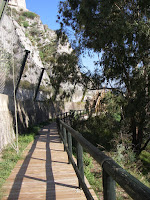
The other day we took a walk to the castle/fort that sits above our town of Roccella.  We wanted to take in the local sites in walking distance.
 Here's what we discovered:
1) Great walking/running paths, around and up to the Castle
2) Exercise walking/running routes, 8 of them of different lengths, scenery and difficulty
3) A Norman castle, fort and rubble....possibly ancient rubble
4) W.W.2 tunnels under the castle (sorry no pic)
5) Beautiful old town with winding cobblestone streets

Castle and fort

Walk along the ramparts

Looking west from the castle

Cobblestone streets

Serious fitness here

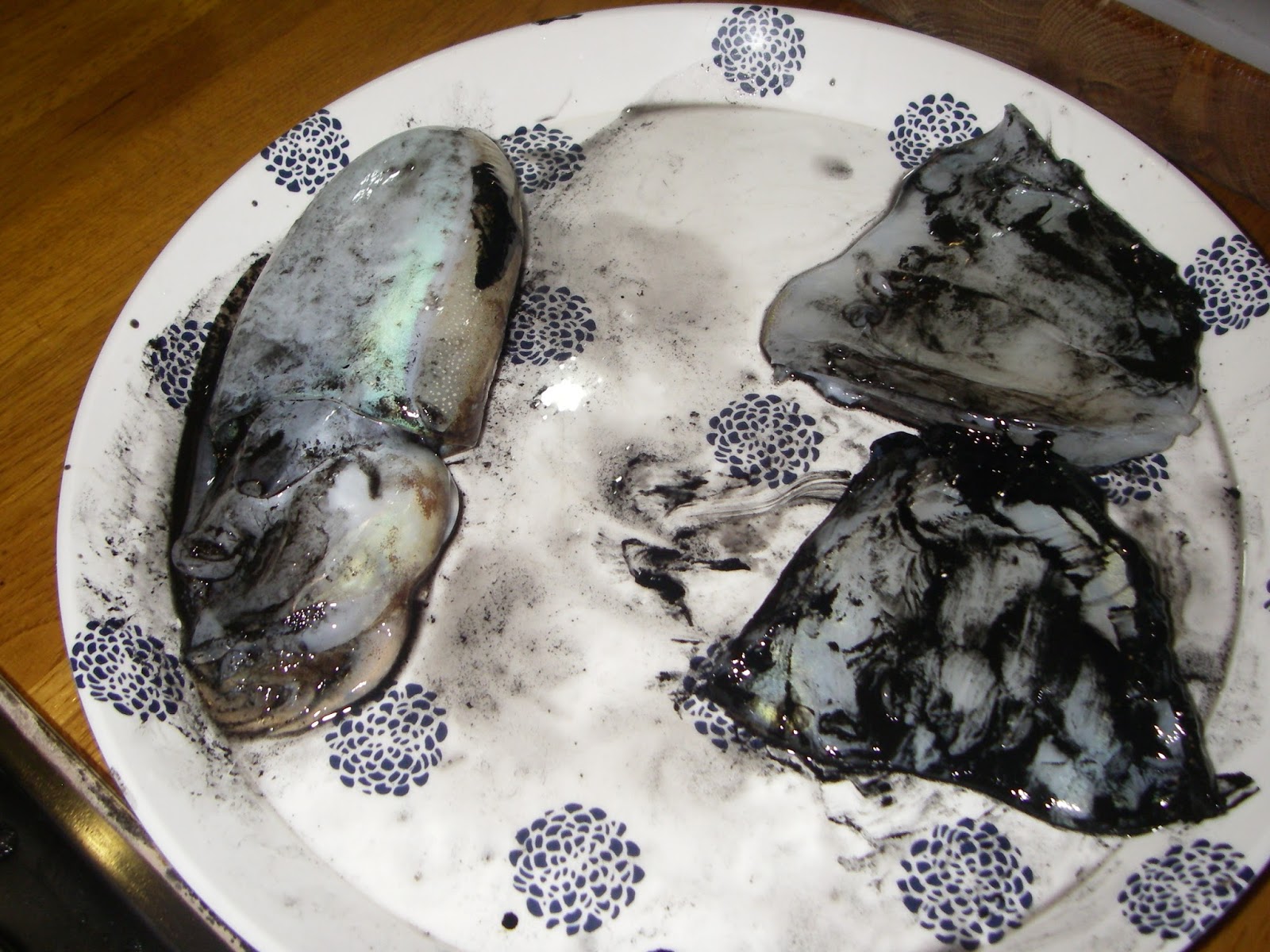
We also discovered that not only is the town and surrounding countryside beautiful but so are the people.   Our boat neighbour, who has already fixed our fridge, goes fishing on the weekends.   Twice he gave us part of his catch.  First it was 3 large large squids.   Next time it was a mahi mahi.  No reason for him to share, its just because people are nice here, and in Sicily too.  Other neighbours have given us home made sweets, wine, olives, wine, olive oil, wine...and smiles.


Squids, after a knife fight

So much ink, still cleaning it up

We like fish. 

Since we are Sicilian dogs there is no need for us to learn Italian but others on the boat, should.  A new friend, Larry (born in Thunder Bay but has lived in Roccella most of his life) who knows everyone has found us Italian lessons, held 3 times a week in the local elementary school.  The course is for immigrants.  Taught by an Italian speaking only, professora, 4 hours per evening.  The students are from Romania, Sri Lanka, Cuba and North Africa.  
We have hope that Maggie might learn a few words, pronounce vowels and conjugate verbs properly,  Branko goes, to explain the lessons to Maggie.

Spices at the market

Branko, market negotiations


Every Tuesday the local market arrives here in Roccella.  The local markets sell mostly fruit and vegetables that are in season.  Currently available are hot peppers, cucumbers, olives, chestnuts and big orange squash (not a pumpkin),  apples, pears and grapes are the fruits.  Branko has been cheerfully discovering his country roots, putting up olives in brine, fermenting hot peppers, making sauerkraut and contemplating kimchi.   Step by step procedures with pictures coming soon to this blog station.

We think, for now that we've accomplished writing a few words and look forward to compiling our next blog.  Thanks for reading.

Wylie and Rosie
(The Pupinaros)
Chillin', and playing some music